Hablamos Español!
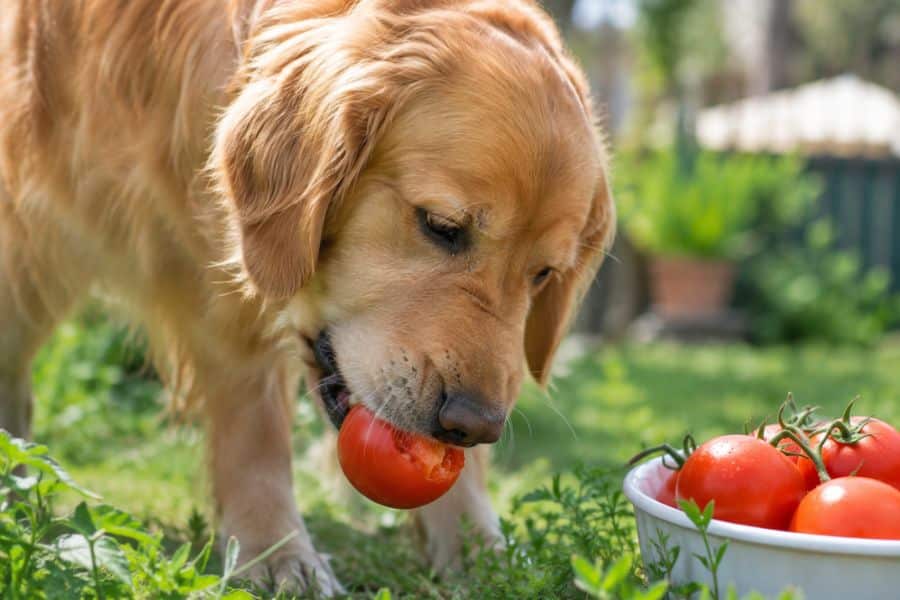
A ripe red tomato can look harmless, yet some dogs develop stomach upset, drooling, weakness, or other signs after eating one. The issue depends on tomato ripeness, plant parts, quantity, and each dog’s sensitivity. Ripe tomato flesh is generally considered safe for most dogs in small amounts. Green tomatoes, stems, and leaves deserve more caution.
Dogs with food sensitivities may react to tomato even when another dog has no problem. This guide explains what causes tomato reactions, which symptoms matter, what to do after exposure, and how to offer safer choices.
Are Tomatoes Safe for Dogs?
Tomatoes are not automatically toxic to dogs. A piece of ripe, red tomato flesh is usually tolerated by healthy dogs. Tomatoes contain water, fiber, and vitamins.
The concern comes from the tomato plant. Unripe green tomatoes, leaves, and stems contain higher levels of tomatine, a naturally occurring compound related to solanine. Large amounts can cause digestive or neurological signs. Risk depends on how much was eaten and which plant part was consumed.
Tomato sauces, canned products, and prepared foods create another concern. They can contain onion, garlic, excessive salt, sugar, or spices that are unsuitable for dogs.
Why Might a Dog React Badly?
A tomato reaction can have several explanations.
Sensitive Digestion
Some dogs have sensitive stomachs. Acidic foods, unfamiliar ingredients, or a sudden dietary change can trigger vomiting, loose stool, gas, or abdominal discomfort.
Food Sensitivity
A dog may have an individual intolerance to an ingredient. The response can include digestive problems, itching, red skin, ear irritation, or repeated licking. A true food allergy involves the immune system and can cause more serious reactions.
Tomatine Exposure
Green tomato material contains more tomatine than ripe fruit. Eating a large amount of unripe tomato, leaves, or stems can increase the chance of concerning signs. Puppies and small dogs may face greater risk from a given amount due to their lower body weight.
What Happens After a Dog Eats Tomato?
The outcome depends on the food. A dog that steals one bite of ripe tomato may show no reaction. Another dog may develop mild digestive upset.
Watch for vomiting, diarrhea, drooling, reduced appetite, stomach discomfort, weakness, unusual tiredness, or changes in behavior. Exposure to larger amounts of green tomato or plant material can produce more serious signs, including coordination problems or abnormal heart activity.
A dog showing severe weakness, repeated vomiting, collapse, breathing difficulty, tremors, seizures, or marked behavior changes needs prompt professional attention.
What Should You Do If Your Dog Eats a Tomato?
Stay calm and identify what was eaten. Note whether it was ripe or green, whether leaves or stems were involved, and roughly how much your dog consumed.
Do not make your dog vomit unless a qualified professional specifically tells you to do so. Do not give human medicines or home remedies without guidance.
Contact your veterinarian if your dog ate a large amount, consumed green tomatoes or plant parts, is very small or young, has existing health concerns, or develops symptoms. Keep the product packaging or a sample available if prepared tomato food was involved.
How to Feed Tomatoes More Safely
If your dog tolerates tomato, use plain, ripe, red flesh as an occasional treat. Wash it, remove the stem and leaves, and cut it into small pieces. Introduce only a tiny portion when trying it for the first time.
Skip unripe green tomatoes and every part of the plant. Avoid tomato-based foods containing onion, garlic, heavy seasoning, or excessive sodium.
Treats should remain a small part of a dog’s overall diet. A balanced dog food should provide the main source of daily nutrition.
Tomato Allergy vs. Toxicity: What Is the Difference?
These terms describe different problems. A food allergy involves an immune response and may cause itching, skin changes, gastrointestinal upset, facial swelling, or breathing problems. Toxicity results from exposure to a harmful substance or excessive amount.
The signs can overlap, so guessing the cause at home can be unreliable. Repeated symptoms after tomato deserve discussion with a veterinary professional. Your dog may need an elimination diet or another evaluation to identify the trigger.
When Is Veterinary Care Needed?
Mild symptoms after a small amount of ripe tomato may resolve with observation, but concerning signs should not be ignored. Veterinary care is appropriate when symptoms are persistent, severe, or unusual for your dog.
Emergency attention is warranted for collapse, seizures, severe weakness, breathing difficulty, or significant swelling. Green tomato plant exposure deserves extra caution, especially when the amount consumed is unknown.
Frequently Asked Questions(FAQs):
1. Can dogs eat tomatoes safely?
A: Healthy dogs can usually eat small amounts of ripe, red tomato flesh. Remove stems and leaves, avoid unripe tomatoes, and monitor your dog for digestive upset or other unusual symptoms after introducing this food.
2. Are green tomatoes toxic to dogs?
A: Green tomatoes contain more tomatine than ripe tomatoes. A small accidental bite may not cause a problem, but larger amounts or exposure to leaves and stems can increase risk and warrant professional advice.
3. What are signs of tomato poisoning in dogs?
A: Possible signs include vomiting, diarrhea, drooling, weakness, unusual tiredness, poor coordination, or behavior changes. Severe exposure may cause tremors, seizures, collapse, or abnormal heart activity and requires urgent professional attention.
4. Can dogs eat tomato sauce?
A: Tomato sauce is not a good routine treat for dogs. Many sauces contain onion, garlic, salt, sugar, or spices. Read the ingredient label and choose plain, dog-appropriate foods instead of seasoned sauces.
5. Can dogs be allergic to tomatoes?
A: Yes, an individual dog can react adversely to tomato. Allergy signs may include itching, skin irritation, digestive upset, facial swelling, or breathing problems. A recurring pattern should be assessed by a professional rather than diagnosed at home.
6. Should I call a vet if my dog ate a tomato plant?
A: Contact a veterinary professional if your dog consumed leaves, stems, many green tomatoes, or an unknown amount. Immediate help is important when vomiting, weakness, tremors, seizures, collapse, or breathing difficulty develops.